Home»Blog
POTD 7/25/26
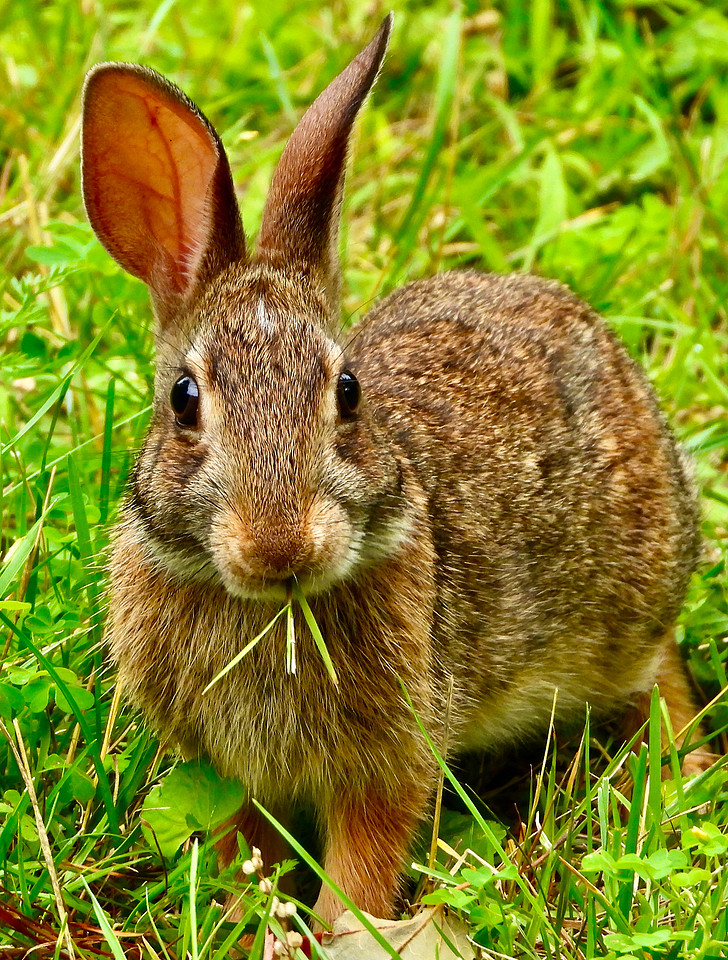
JUST BUNNY CUTE - Nothing special about a bunny munching grass...An Eastern Cottontail Rabbit that is not a a bird. ;-)

POTD 7/24/26
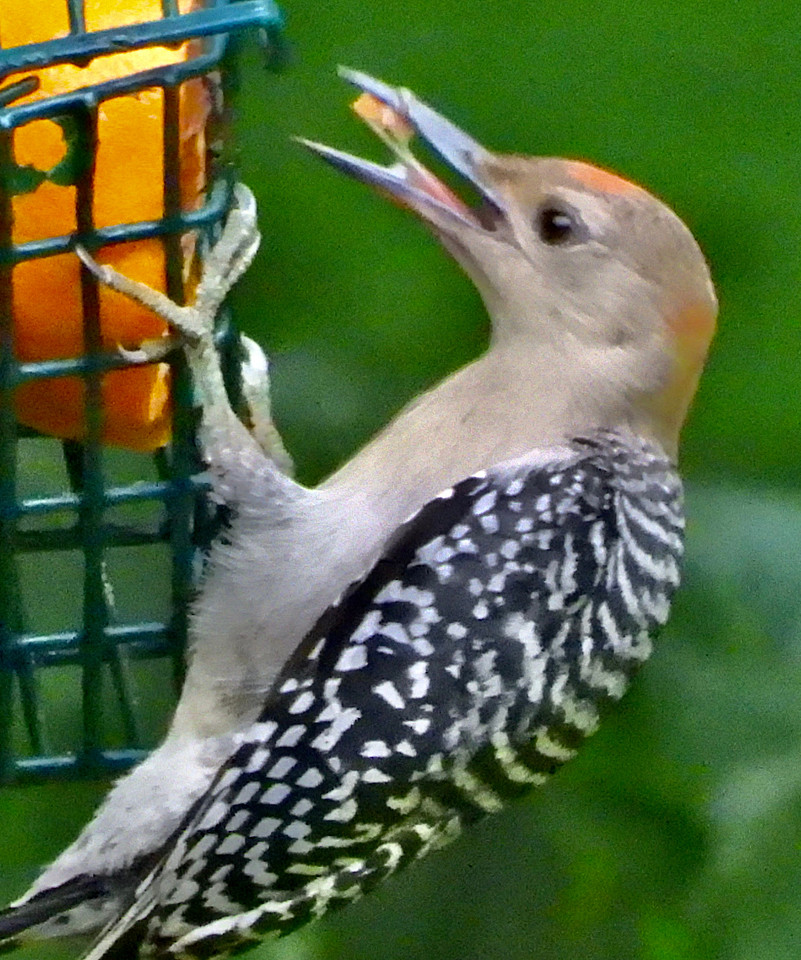
YOUNGSTER - An immature Red-bellied Woodpecker eats oranges in a suet feeder. The young Red-bellied Woodpeckers are the new regulars at the feeders.
POTD 7/23/26
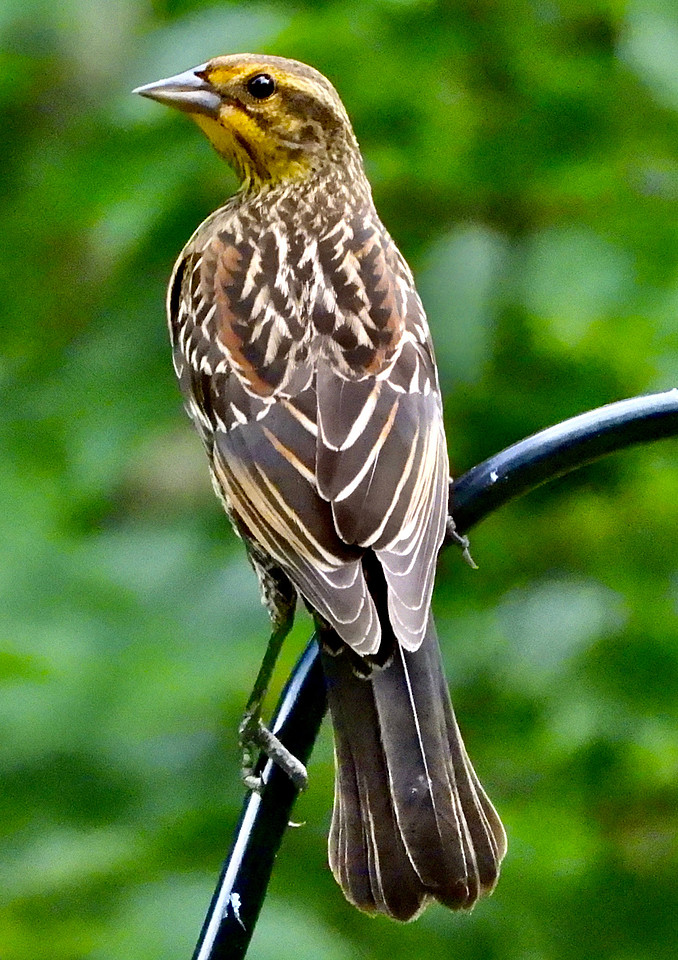
BIRD DIMORPHISM PART II - When birds of the same species look different - it is called sexual dimorphism. This female looks nothing like her Red-winged Blackbird mate...in fact, nothing about this bird says "I'm a kind of Blackbird". Male's flashy plumage may attract mates - but I think this female Red-winged Blackbird is prettier than the male.
POTD 7/22/26
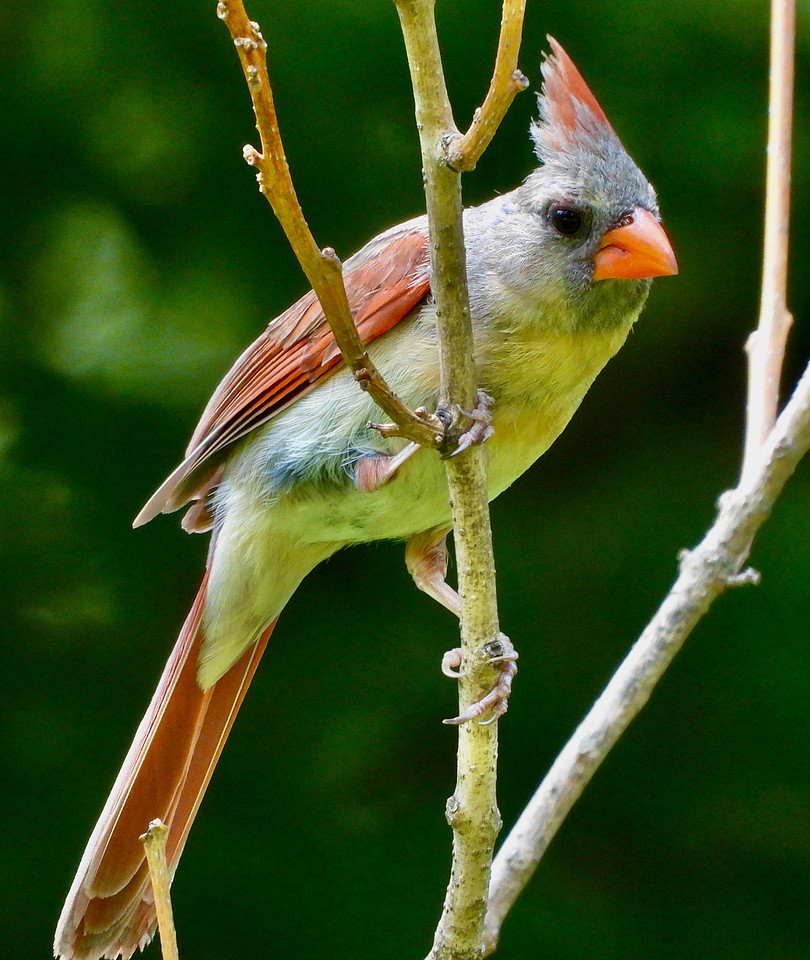
SHE LOOKS DIFFERENT - Sexually dimorphic birds exhibit distinct physical differences - like plumage, coloration or size - between males and females of the same species. The Northern Cardinal is a classic example where the males are brilliant, unmistakable red with a black mask, while females (like this one in our yard) are a softer gray/olive-brown tinged with red. The differences are driven by natural and sexual selection. Brighter male plumage helps attract mates, while duller camouflaged female feathers protect them on the nest.
POTD 7/21/26
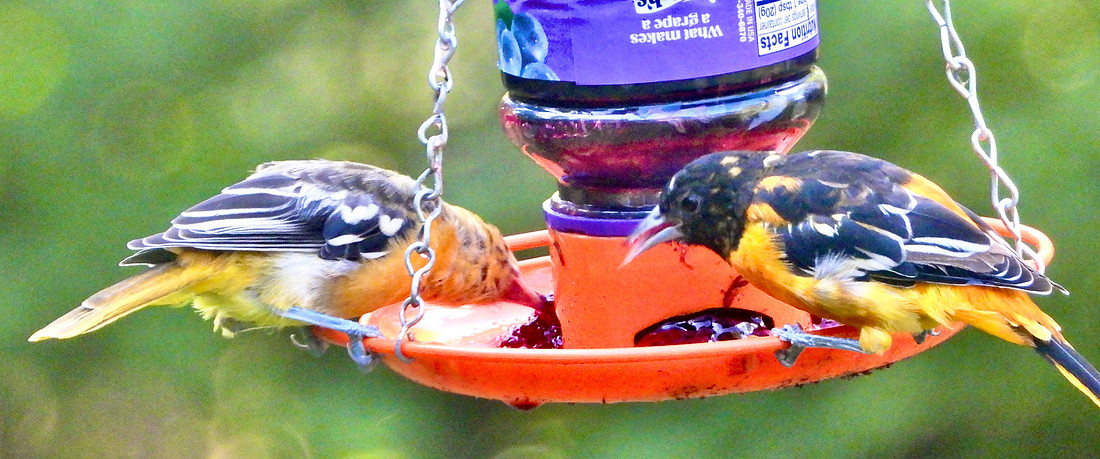
FILLING UP FOR THE FLIGHT - Immature Orioles hanging at the jelly feedeer. Juvenile Orioles feed very heavily right before they migrate This process is called hyperphagia, which is when birds eat a lot more food than normal so their bodies can store fat for energy. The sugary jelly is quickly turned into fat. Fat is the most important fuel for birds to make long journeys over land and water.