
Home»Blog
POTD 12/28/24
LARGEST WOODPECKER - We see lots of woodpeckers - Downy, Hairy and Red-bellied - but we mostly hear the largest of our woodpeckers - the Pileated Woodpecker. Vic heard this one before we spotted it at the very top of a tall pine snag, catching the first rays of sunshine of the day.


POTD 12/27/24
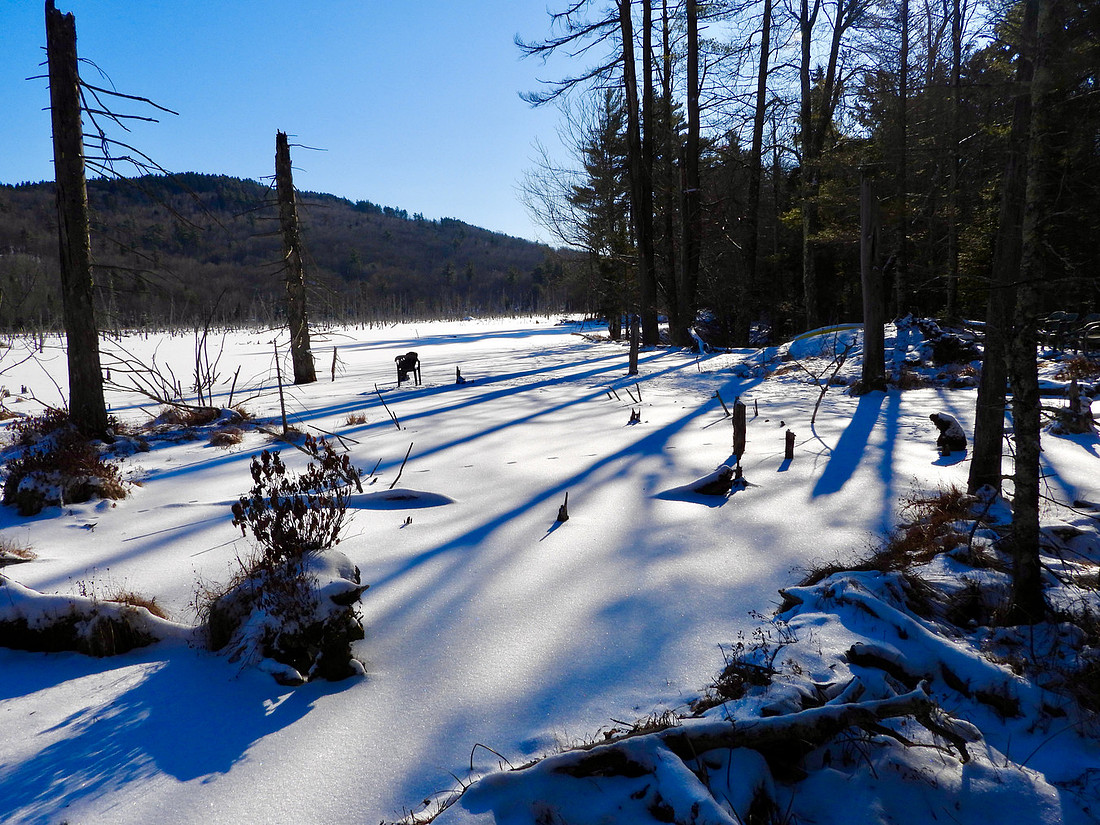
WINTER SHADOWS stripe the beaver pond...even as the post-winter solstice days start getting longer.
POTD 12/26/24
DON'T BUG ME - While common at suet feeders, Downy Woodpeckers eat mainly insects, including beetle larvae that live inside wood or tree bark. It's not unusual to see a Downy, like this female, working the sides of the tree - pecking at cracks in the bark.

POTD 12/25/24
TINY CHRISTMAS TREES - Tree Clubmoss, aka "princess pine" trees grace the path to the beaver pond. Clubmoss is more closely related to ferns than moss. Clubmoss ancestors in the Carboniferous Period were tree-sized. Over the eons, compression and heat transformed them into the coal beds that have fueled the modern world - releasing stored carbon in the process. (from the Nature Almanac & Calendar by Francie VonMertens)

