Home»Blog
POTD 8/20/25
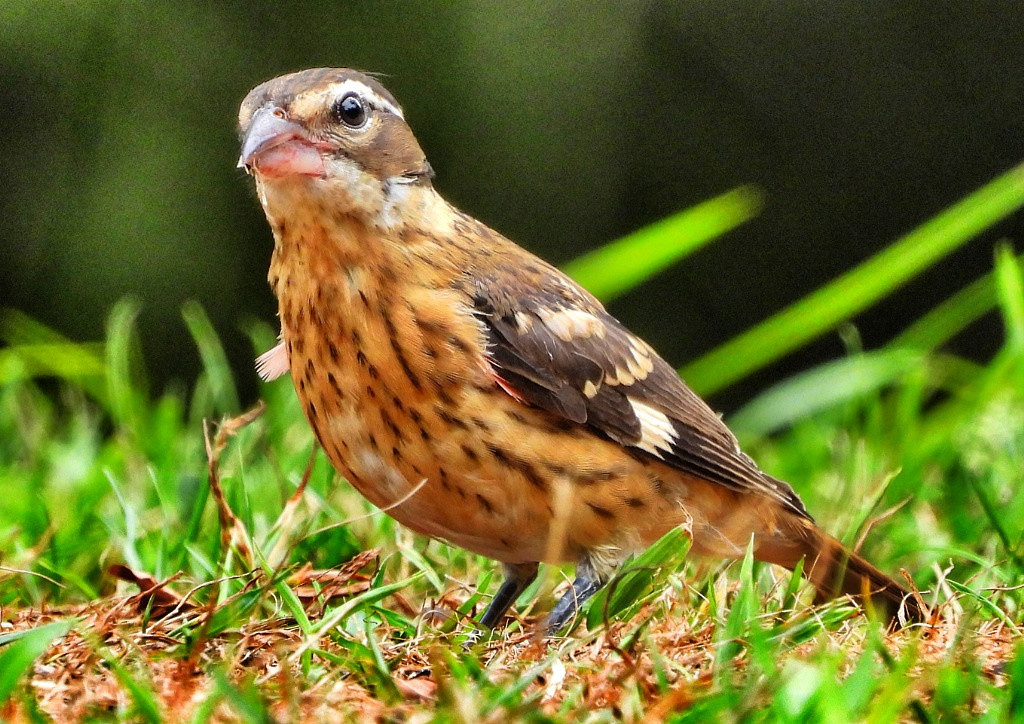
YOUNG GROSBEAK - An immature Rose-breasted Grosbeak scratches under the feeder. We have regular Grosbeaks and almost always see the adults feeding the fledglings. We don't usually see the nearly full-grown fledglings with the touch of red on their streaked breast.

POTD 8/19/25
IN DISGUISE - Misumena Vatia - the tiny Goldenrod Crab Spider hunts insects on a Sunflower bloom. They are called crab spiders for their unique ability to walk sideways as well as forward and backward. They use venom to immobilize prey - insects often much larger than themselves. They are most often found on yellow flowers and use their color as active camouflage and can change their color from yellow to white depending on the flower they are hunting on.

POTD 8/18/25
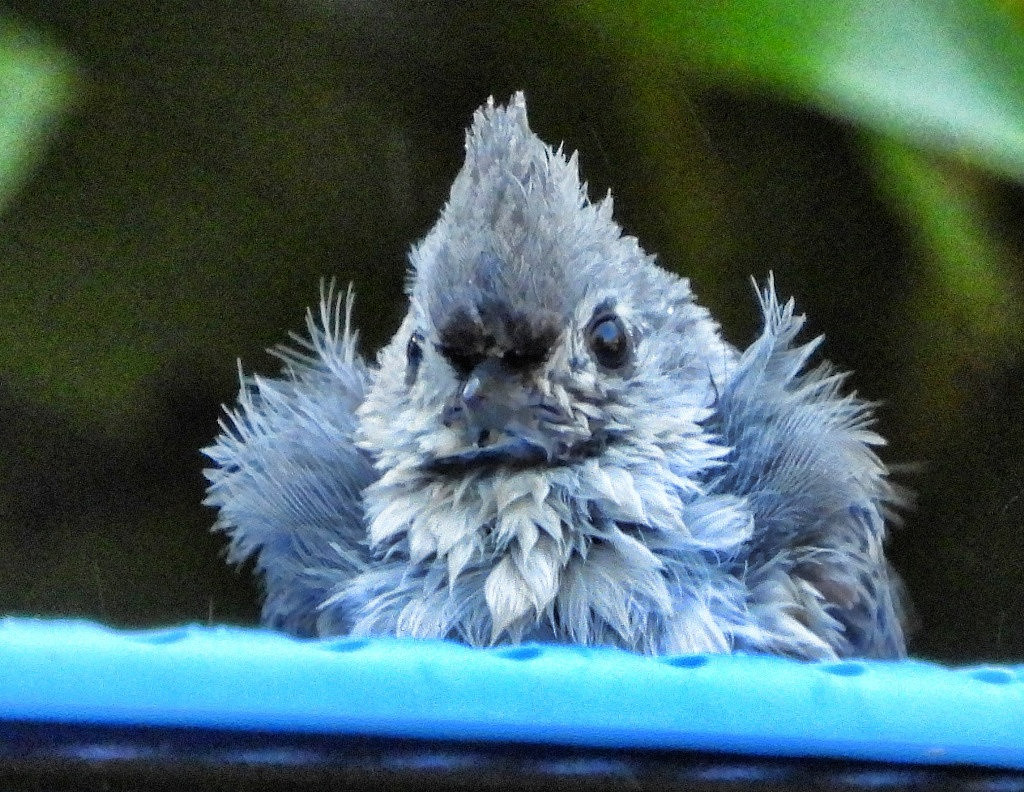
CAUGHT IN MY BATH - A Tufted Titmouse bathes in the patio birdbath. Birds don't have sweat glands, so they rely on water to help them cool down. bathing helps them dissipate heat and regulate their body temperature. New Hampshire is nearing a record for the number of days above 90 degrees...so everyone is trying to stay cool.
POTD 8/17/25
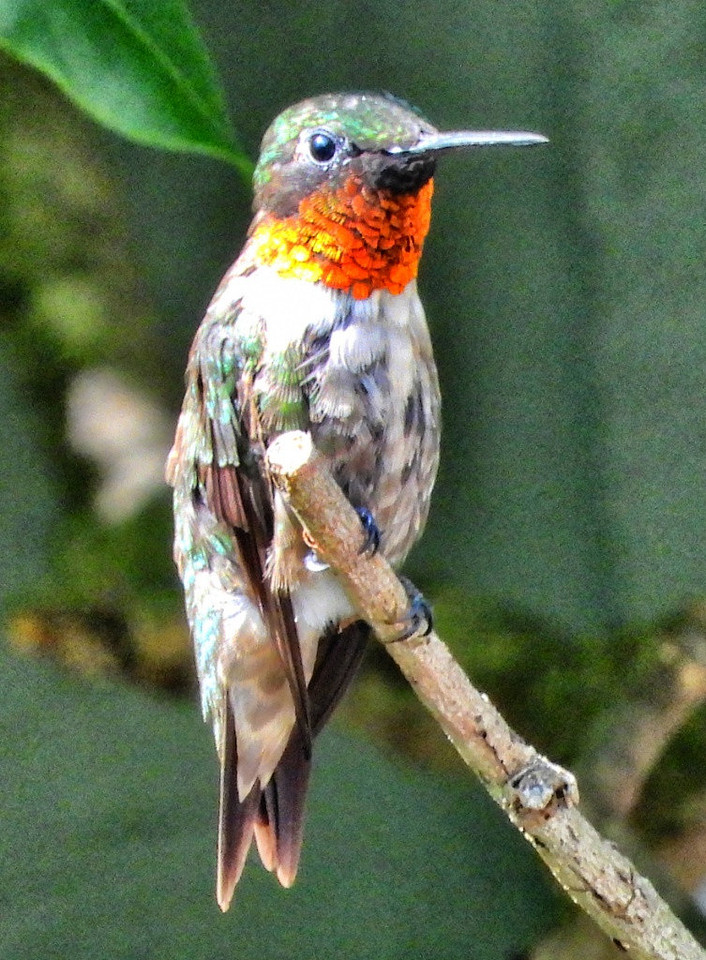
GETTING NEW THREADS - A male Ruby-throated Hummingbird shows signs of molting. Yes, Hummingbirds do molt, shedding their old feathers and growing new ones. This process is similar to what other birds do and is crucial for maintaining their plumage and flight capabilities. Molting in Hummingbirds typically occurs once a year, usually starting in late summer or early fall as they prepare for migration.
POTD 8/16/25
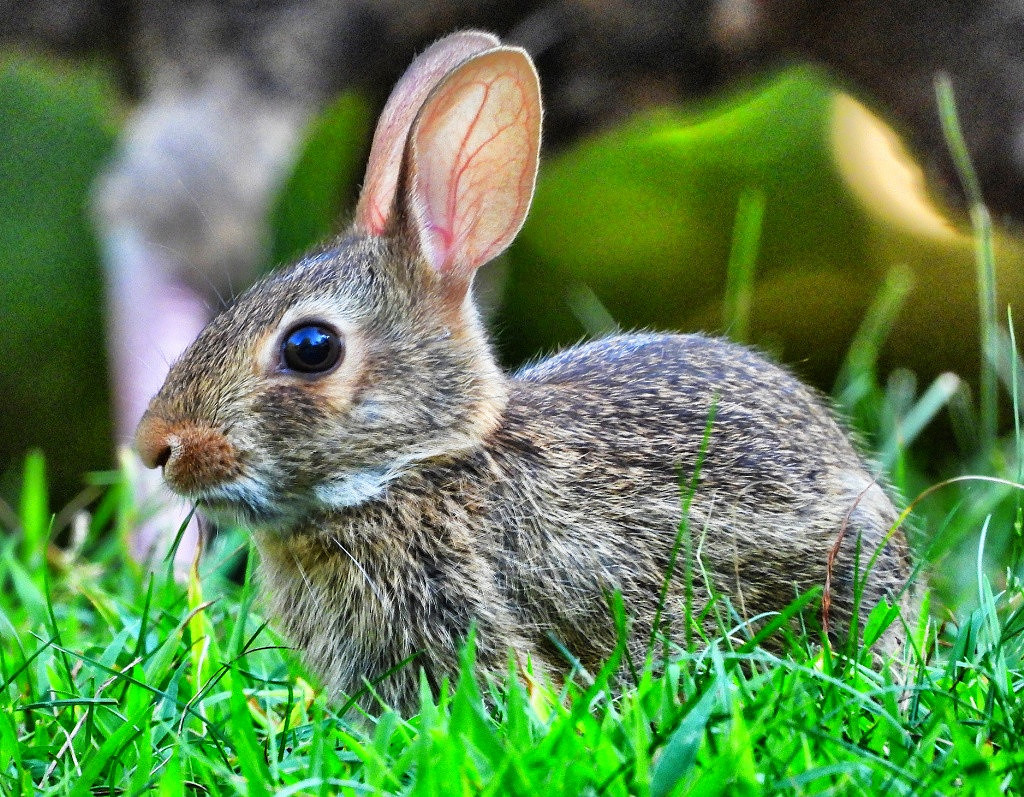
IT HEARD ME COMING - A small Eastern Cottontail Rabbit forages in the yard. Rabbits' large ears DO help them hear better by acting as "satellite dishes" funneling sound into the ear and allowing them to detect faint sounds from a distance. But the long ears also help the rabbit regulate body temperature and their hearing is not significantly better than humans.